

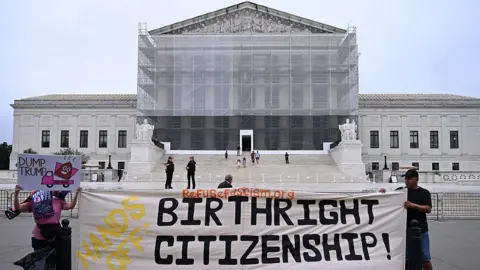
The top court has will hear a significant case that challenges a century-old principle: birthright citizenship for individuals born in the United States.
On his first day in office this January, President Donald Trump enacted a directive aiming to terminate this practice, but the move was struck down by the judiciary after lawsuits were initiated.
The Supreme Court's final judgment will either affirm citizenship rights for the infants of migrants who are in the US without authorization or on short-term permits, or it will overturn the provision entirely.
Next, the court will set a time to hear the case between the government and the suing parties, which include parents who are immigrants and their young children.
The Legal Foundation
For more than 150 years, the Fourteenth Amendment has enshrined the rule that anyone born in the United States is a American citizen, with exceptions for children born to embassy personnel and members of foreign military forces.
"All persons born or naturalized in the United States, and subject to the jurisdiction thereof, are citizens of the United States."
The disputed presidential order sought to refuse citizenship to the offspring of people who are either in the US illegally or are in the country on short-term status.
The United States is among about a minority of states – mostly in the Western Hemisphere – that grant immediate citizenship to anyone born in their territory.
